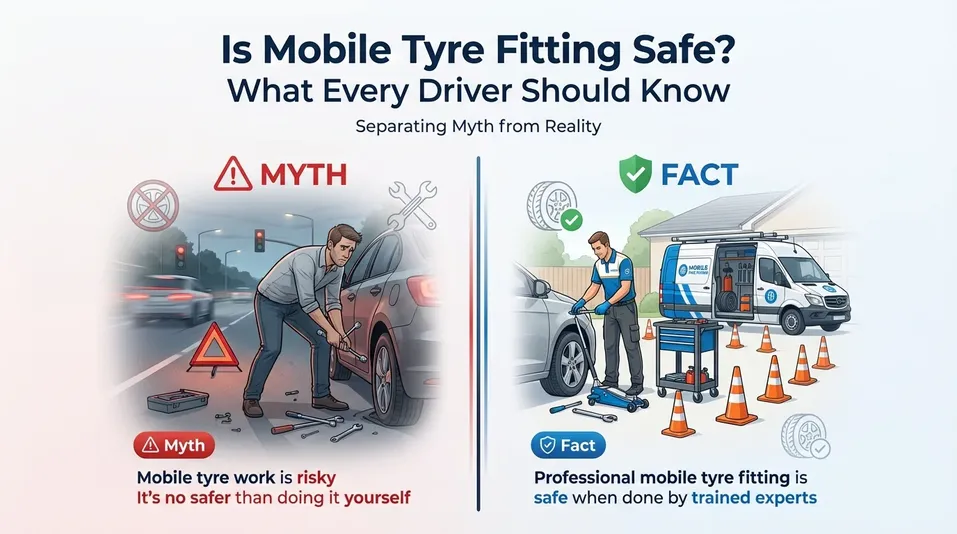
Is Mobile Tyre Fitting Safe and Reliable?
It’s a fair question. Handing your vehicle over to someone working out of a van rather than a fixed workshop with a reception desk feels different. And if you’ve always used a garage, that difference is enough to make you pause before booking.
The short answer is yes, mobile tyre fitting is safe provided it’s done by a properly equipped technician who follows the correct process. The longer answer is worth understanding, because it helps you know exactly what a good job looks like and what to watch out for.
What makes a tyre fitting safe?
Whether a tyre is fitted in a garage or on your driveway, the same technical requirements apply. The job is safe when:
None of those things require a fixed workshop. They require the right equipment and a technician who knows what they’re doing.
What equipment does a proper mobile fitter carry?
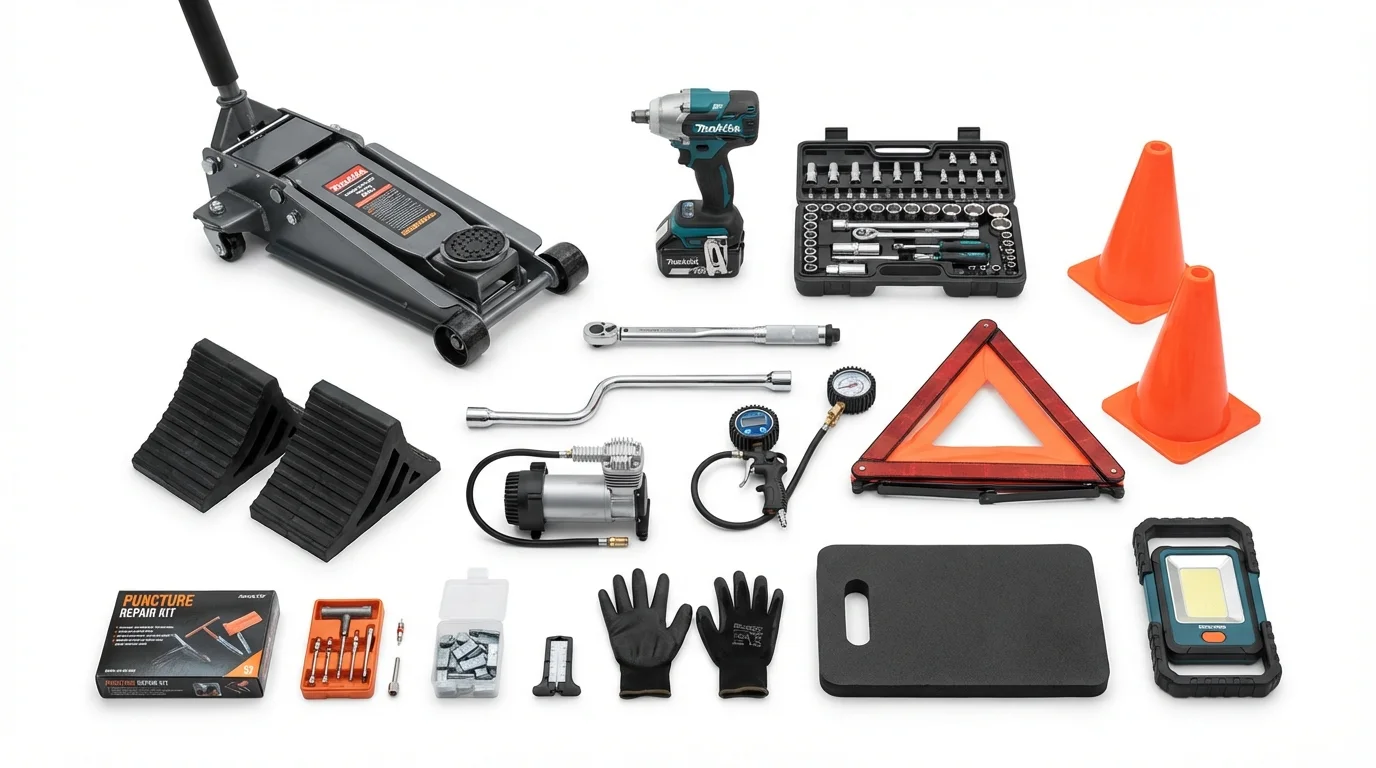
This is where the quality gap between good and poor mobile fitters shows up. A properly equipped mobile fitting van carries:
Tyre changing machine
Removes and mounts the tyre to the rim without damaging the wheel. Doing this by hand increases the risk of bead damage or rim scratches, particularly on alloy wheels.
Wheel balancing machine
Balances the wheel after the new tyre is fitted. Skipping this step leads to vibration through the steering, uneven tyre wear, and faster component wear. Every tyre replacement should include balancing as standard not as an optional extra.
Calibrated torque wrench
Tightens wheel nuts to the correct torque for your vehicle. Over-tightening can warp brake discs and make future removal dangerous. Under-tightening is an obvious safety risk. A proper torque wrench eliminates both.
Air compressor
Sets tyre pressures correctly after fitting. Driving on incorrect pressure even briefly affects handling and tyre life.
Hydraulic jack and axle stands
Lifts the vehicle safely and supports it securely during the job.
If a mobile fitter is offering unusually cheap prices but doesn’t carry a balancing machine, that’s worth questioning. Balancing is part of the job, not a bonus.
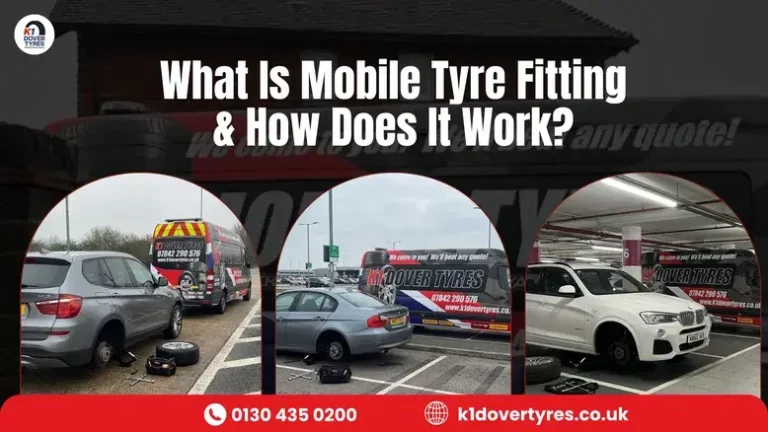
To understand more about the full fitting process, our guide on what mobile tyre fitting is and how it works covers each step in detail.
Is the quality the same as a garage?
For tyre fitting specifically yes, when done correctly. The equipment used by a well-equipped mobile fitter is the same category of equipment used in a tyre garage. The job itself remove, mount, balance, refit, torque, pressure check is identical.
What a mobile fitter generally can’t do at your location is wheel alignment. Alignment requires specialist equipment that can’t be carried in a van. If your vehicle needs alignment checked (which is worth doing after a tyre replacement on the front axle), a garage visit for that one service makes sense. The tyre fitting itself doesn’t require it.
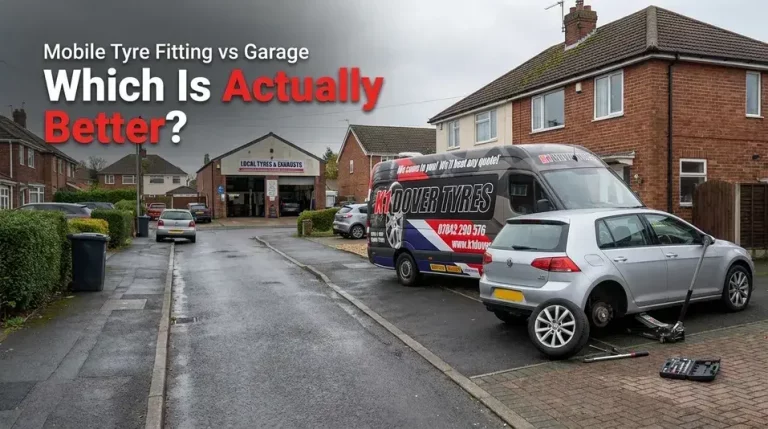
We compare mobile fitting and garage visits in more detail in our mobile tyre fitting vs garage guide.
Is the location a problem?
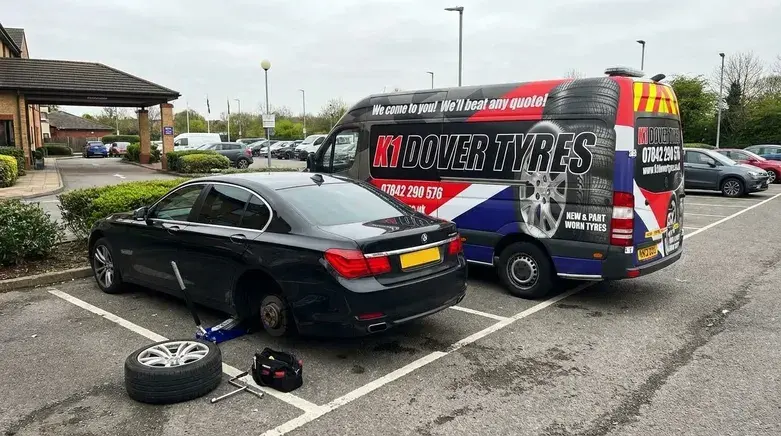
A common concern is whether fitting a tyre on a driveway or in a car park is less safe than a garage floor. In practice, the requirements are the same a reasonably flat, solid surface where the vehicle can be safely jacked up and supported.
Driveways, home car parks, office car parks, and roadside-safe laybys all work fine for the vast majority of jobs. If you’re unsure whether your location is suitable, a good fitter will tell you honestly rather than attempt the job in unsafe conditions.
Fitting at the roadside after a breakdown is also possible, but location matters more there. A safe stopping place a layby, a service area, a wide verge is always preferable to a live lane or a narrow road shoulder.
What should you check before booking?
You don’t need to interrogate every fitter, but it’s reasonable to confirm a few things:
A fitter who answers those questions confidently and clearly is worth trusting. One who deflects or can’t answer them clearly is a warning sign.
At K1 Dover Tyres we carry full fitting and balancing equipment on every call-out and work across Kent including Dover, Canterbury, Maidstone, Ashford, and Medway. If you have questions about a specific job before booking, just ask we’d rather give you a straight answer than have you second-guess the booking.
What about reliability will they actually show up?
Safety and reliability are different things. Reliability comes down to the company, not the format. A good mobile tyre fitter like a good garage will confirm your booking, keep you updated, and arrive when they said they would.
For emergency call-outs, realistic expectations matter. Demand, location, and traffic all affect arrival time. A fitter who gives you an honest estimate and keeps you informed is more reliable than one who promises 20 minutes and disappears.
Check reviews, confirm the booking details, and if it’s a non-emergency, book in advance rather than relying on same-day availability during peak times.
Book mobile tyre fitting in Kent